
Posted on

CvSU and AGAP Sign MOU to Advance Organogenesis Propagation, Agarwood Bio-Inoculant Innovation, and Biofertilizer Development

Dr. Ma. Agnes P. Nuestro, President of Cavite State University (CvSU) and Mr. Manuelito R. Putong, President of Agarwood Growers Association of the Philippines Incorporated (AGAP) signing the Memorandum of Understanding (MOU).

Indang, Cavite, Philippines — Cavite State University (CvSU) and the Agarwood Growers Association of the Philippines Inc. (AGAP) have formally signed a Memorandum of Understanding (MOU) to initiate a long-term scientific and technological collaboration focused on organogenesis propagationbio-inoculant development, and biofertilizer research for the growing Philippine agarwood industry.

The partnership brings together CvSU’s strong research expertise in agriculture, biotechnology, and plant sciences with AGAP’s nationwide network of agarwood growers, industry practitioners, and field-based innovation platforms.

This MOU marks a milestone in the country’s movement toward science-based, sustainable, and globally competitive agarwood production.

Strengthening Organogenesis & Mass Propagation of Aquilaria

Under the collaboration, CvSU will lead research efforts to refine and scale organogenesis protocols for Aquilaria malaccensis and other perfumery crops. The research program aims to:

• Improve survivability and rooting efficiency
• Enhance clonal fidelity and genetic stability
• Reduce propagation costs through refined media formulations
• Create mass-production pathways for consistent, high-quality planting materials
• Establish a university-industry model for tissue culture commercialization

“This partnership empowers CvSU to translate academic research into real-world agricultural impact,” said CvSU project leads during the signing ceremony.

Joint Development of Agarwood Bio-Inoculants

CvSU and AGAP will also collaborate on bio-inoculant research aimed at improving sustainable resin induction. The project will explore:

• Fungal and microbial strains beneficial to resin formation
• Biological inoculation pathways and host-pathogen interactions
• Safety, efficacy, and optimized application protocols
• Side-by-side comparisons with chemical and hybrid induction methods
• Field validation through AGAP’s nationwide member farms

AGAP emphasized that this initiative will pave the way for ethical, science-verified, and legally compliant agarwood production across the Philippines.

Biofertilizer Research for High-Value Trees

The partnership further expands into the development of biofertilizers that support the long-term growth, vigor, and environmental resilience of agarwood and related forestry crops. Research areas include:

• Formulation of nutrient-enhancing microbial consortia
• Soil microbiome enhancement strategies
• Climate-smart fertilization systems
• Field trials in diverse agroecological conditions
• Integration into sustainable agroforestry frameworks

These biofertilizers aim to reduce growers’ dependence on chemical inputs while improving yields and ecological outcomes.

A Unified Vision for a Sustainable Agarwood Sector

CvSU and AGAP share a mission to uplift the Philippine agarwood industry by merging academic excellencescientific integrity, and farmer-level capacity building.

Through this MOU, both institutions commit to:
✓ Advancing national research leadership in perfumery crops
✓ Providing farmers with reliable, science-backed technologies
✓ Supporting regulatory compliance and sustainable practices
✓ Developing future-ready biotech solutions for the forestry and wellness industries
✓ Strengthening the value chain from propagation to production

About Cavite State University (CvSU)

CvSU is a premier agricultural and science university dedicated to research, innovation, and community development across multiple campuses in Cavite.

About AGAP

The Agarwood Growers Association of the Philippines Inc. (AGAP) is a national organization committed to sustainable agarwood cultivation, training, regulatory compliance, and industry advancement.

Posted on

ISAT-U and CAGI Launch Landmark Partnership on Blockchain Traceability and Advanced Agarwood Cultivation

From left: Mr. Manuelito R. Putong, President of Crown Agarwood Group Inc (CAGI); Dr. Gilbert Stanly Baylosis, Campus Administrator, ISATU- Leon Campus; Dr. Carmelo V. Ambut, VicePresident for Research and Extension of ISAT-U; Mr. Norberto S. Joyel, Chairman of Putz Agarwood Farm Corporation (PFAC); and Mr. Manuelito Laurenti E. Putong, President of Aetherial Natural Oils Corp (ANOC).

Iloilo City, Philippines — Iloilo Science and Technology University (ISAT-U) and Crown Agarwood Group Inc. (CAGI) have officially entered a landmark collaboration to advance the Philippines’ position in the global agarwood industry through blockchain-enabled digital traceability and science-driven cultivation technologies.

The partnership unites ISAT-U’s expertise in applied science, information technology, and sustainable innovation with CAGI’s leadership in agroforestry development and high-value crop cultivation. Together, they aim to establish the country’s first integrated system that enhances legal compliance, transparency, and scientific accuracy in agarwood production and trade.

A Breakthrough in Digital Traceability

The collaboration includes the development of a Blockchain Digital Traceability System designed to track the full lifecycle of agarwood — from seed source and nursery propagation to inoculation, harvesting, resin grading, and international trade documentation.

This platform will:
• Strengthen CITES compliance and regulatory monitoring
• Build grower credibility and consumer trust
• Combat illegal trading and smuggling
• Streamline export processes through verifiable digital records
• Support global buyers seeking ethically sourced, legally traded agarwood

“This technology sets a new benchmark for transparency in the forestry and perfumery industries,” said Manuelito R. Putong, President of Crown Agarwood Group Inc (CAGI), highlighting the system’s importance in elevating Philippine agarwood to international standards.

Advancing Science-Based Agarwood Cultivation

In parallel, ISAT-U will support research and development in modern agarwood cultivation, focusing on:
• Biological and artificial inoculation methods
• Soil and nutrient optimization
• Organogenesis and tissue propagation
• Growth performance modeling
• Sustainability-focused agroforestry system design

CAGI will provide plantations, nurseries, and farmer networks for pilot studies, field trials, and technology deployment. The partnership also includes the creation of a Science-Based Agarwood Cultivation Training Program for local growers, cooperatives, and agripreneurs.

“Our goal is to bring the best of science and technology directly to Filipino farmers,” said Dr. Carmelo V. Ambut, VicePresident for Research and Extension of ISAT-U. “This partnership will empower communities with the tools needed for sustainable, high-value production.”

A Shared Vision for a Sustainable Industry

ISAT-U and CAGI share a common vision: a transparent, legally compliant, and globally competitive agarwood industry built on innovation, environmental stewardship, and community empowerment.

The project aims to:
✓ Position the Philippines as a leader in ethical agarwood production
✓ Strengthen national capacity for biotechnology and agroforestry innovation
✓ Create inclusive opportunities for farmers and local enterprises
✓ Promote sustainability in high-value forest commodities
✓ Enhance the country’s export potential through verified digital systems

About ISAT-U

Iloilo Science and Technology University is a premier institution in Western Visayas recognized for excellence in engineering, information technology, and applied research. ISAT-U plays a vital role in advancing scientific innovation and regional development.

About Crown Agarwood Group Inc. (CAGI)

CAGI is a leading agroforestry enterprise dedicated to sustainable plantation development, high-value tree farming, biotechnology application, and eco-friendly production systems for agarwood and other perfumery crops.


Posted on

A Growing Industry for Growing Wealth: Cultivating Prosperity in Emerging Sectors

The phrase “A Growing Industry for Growing Wealth” encapsulates a powerful economic principle: that the key to sustained financial growth lies in aligning with industries that are themselves on an upward trajectory. In today’s rapidly evolving global economy, emerging industries — particularly those rooted in sustainability, innovation, and natural resource stewardship — offer vast potential for wealth creation.

1. Aligning with Growth: Wealth from Emerging Markets

Industries in their growth phase are characterized by expanding demand, innovation, and increasing investment. They often enjoy government incentives, attract investor attention, and offer a favorable environment for entrepreneurship. Examples include:

  • Sustainable agriculture & agroforestry
  • Essential oils & natural cosmetics
  • Biotech & organogenesis
  • Green construction & eco-tourism

Getting involved early in such sectors can result in significant returns, as early adopters often benefit from:

  • First-mover advantages
  • Market influence
  • Brand loyalty establishment
  • Lower competition

2. Case in Point: The Rise of the Perfumery Crop Industry

Take the example of the Agarwood and essential oil industry — once considered niche, now booming due to increased demand for natural, luxury products in perfumery, wellness, and religious practices. The global market for agarwood products is projected to reach billions in the next decade.

By investing in the upstream (cultivation, organogenesis, inoculation) and downstream (extraction, branding, distribution) aspects of this value chain, individuals and companies are tapping into an expanding market — creating not just personal wealth, but also jobs, exports, and rural development.

3. Agriculture Reimagined: Profit with Purpose

Modern agribusiness is no longer just about crops and yields. It’s about sustainable systems that generate long-term returns while restoring ecosystems. Agroforestry plantations, organic fertilizers, and green real estate developments are redefining how land can generate wealth. These are growing industries rooted in:

  • Environmental consciousness
  • Health and wellness trends
  • Local resource utilization
  • Government support for green initiatives

4. Inclusive Growth: Empowering Farmers and Entrepreneurs

A truly “growing” industry also uplifts those at the grassroots. When structured inclusively (e.g., through cooperatives, contract farming, or community estates), wealth creation is not limited to big investors — it becomes a shared journey. This not only improves livelihoods but also strengthens the foundation of the industry itself.

5. Future-Proofing Wealth Creation

In uncertain global markets, industries that focus on regeneration — of health, soil, forests, and culture — are more resilient. They’re aligned with the world’s future needs, making them safer bets for long-term wealth creation.

In Summary

“A Growing Industry for Growing Wealth” is both a philosophy and a strategy. It’s about identifying sectors that are rising — particularly those rooted in sustainability, innovation, and natural abundance — and using them as platforms for inclusive, long-term economic empowerment. Whether you’re an investor, a farmer, an entrepreneur, or a policymaker, aligning with these growing industries means planting the seeds not just for wealth, but for a more regenerative future.

Posted on

Discover the Rare Beauty of Aquilaria parvifolia (Butlong-liitan)

A Living Treasure of the Philippines

Aquilaria parvifolia, locally known as Butlong-liitan, is a rare and exquisite native agarwood-producing species from the Thymelaeaceae family. It is the smallest among its genus, standing at just 1 meter tall, making it a perfect ornamental plant for gardens, botanical collections, and conservation exhibits.

Why Choose Aquilaria parvifolia?
✅ Rare & Exclusive – A unique Philippine-native species, seldom found in cultivation.
✅ Compact & Elegant – Ideal for limited spaces, bonsai enthusiasts, and ornamental gardens.
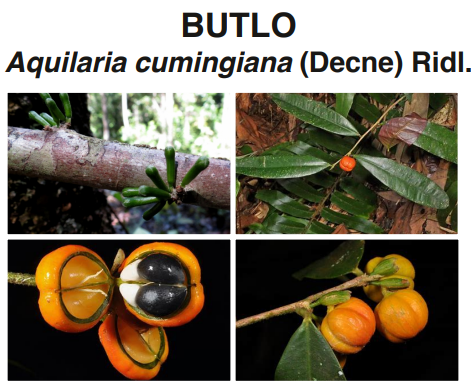
✅ Distinctive Features – Striking reddish fruits and lush green foliage similar to Aquilaria cumingiana (Butlo).
✅ Perfect for Exhibitions – A stunning display plant that showcases biodiversity and conservation efforts.

Cultivated with Care at Nalihawan Agarwood Farm
Since 2019Putz Agarwood Farm Corporation’s Nalihawan Agarwood Farm in Antique has been home to this exceptional species, thriving alongside three other Aquilaria varieties in a 20+ hectare forested area.

Our Mission: Conservation & Distribution
We are dedicated to propagating A. parvifolia for wider distribution as a premium ornamental plant, ensuring its preservation while allowing plant collectors, botanical gardens, and nature lovers to experience its beauty firsthand. However, due to its unique blooming challenges, this species remains extremely rare and highly sought-after.

Posted on

Aquilaria cumingiana: A Rare and Valuable Agarwood Species

Aquilaria cumingiana is a small evergreen tree, reaching up to 5 meters in height. Like other members of its genus, this tree produces precious agarwood when its heartwood is naturally infected by a fungus. Highly aromatic and prized for incense, perfume, and medicine, agarwood has been a sought-after commodity for centuries.

Why is Aquilaria cumingiana so valuable?
✅ Source of Agarwood – Used in luxury perfumes, incense, and traditional medicine.
✅ Natural Fiber Provider – The plant also yields a useful fiber for various applications.
✅ Rare & Endangered – Listed as Vulnerable on the IUCN Red List due to overharvesting and habitat loss.

The Conservation Challenge
Due to its high commercial value, many trees are cut down prematurely—even those uninfected by the fungus—in an attempt to obtain the rare agarwood. This unsustainable practice has led to overexploitation and declining populations across its natural range.

Our Mission: Sustainable Cultivation & Conservation
To protect Aquilaria cumingiana and ensure a future for this valuable species, sustainable harvesting and ethical sourcing are essential. We support reforestation, responsible cultivation, and propagation efforts to preserve this unique tree for generations to come.